Three staples, many food traditions
The Andes are not a single cuisine. Food traditions differ between countries, valleys, highland towns and individual households. Climate, available ingredients and family preferences all shape what ends up on the table. Still, maize, potatoes and quinoa are useful starting points for travelers who want to understand everyday meals rather than recognize only a few famous dishes.
These ingredients can be boiled, toasted, dried, ground or added to soups and stews. The same name may also refer to different preparations depending on where you are. Treat this guide as an introduction, not a definitive menu: when you encounter something unfamiliar, asking how it is made is often more helpful than guessing from its ingredients.
Maize: more than corn on the cob
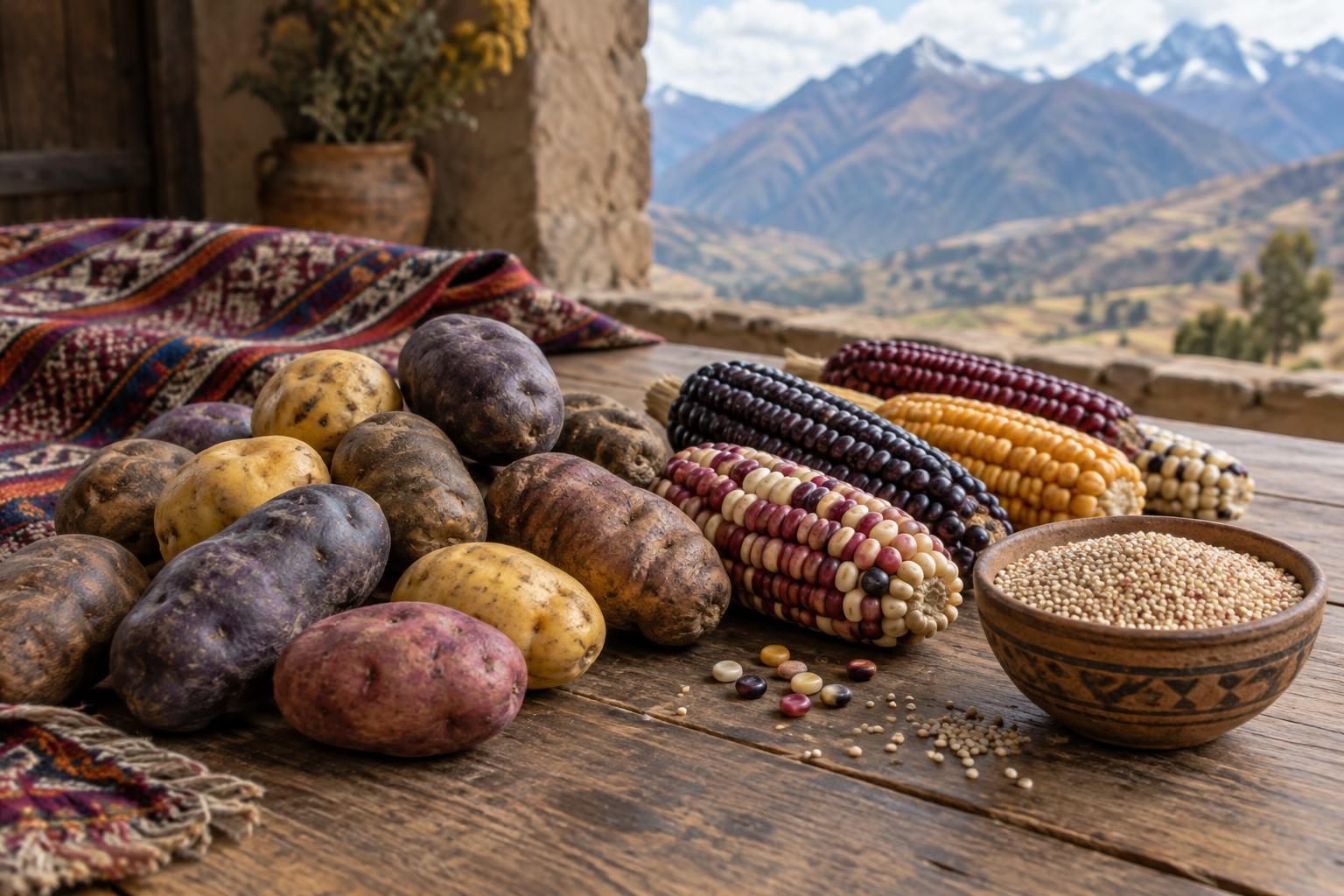
Andean maize comes in varieties with different colors, textures and kernel sizes. Large-kernel maize, often called choclo, may be served boiled as part of a meal or alongside cheese. It can taste and feel different from the sweetcorn familiar to many visitors: some varieties are starchier and more substantial. Maize can also be added to soups, ground into dough or prepared as a drink.
Two names worth recognizing are mote and cancha. Mote generally refers to cooked maize kernels, though the details vary by region. Cancha is toasted maize, commonly eaten as a crunchy snack or served beside a dish. Humitas, made with seasoned maize dough wrapped and cooked in maize husks, are another example of how preparation changes the ingredient. Fillings, seasoning and whether a version is sweet or savory depend on local custom and the cook.
Potatoes: fresh, dried and served in countless ways
Potatoes are a familiar ingredient with an especially wide range of Andean varieties. At a market, you might see potatoes in different shapes and colors, chosen for how they hold together, soften or taste when cooked. In everyday meals they may be boiled, roasted, fried or added to a soup or stew. A simple serving of potatoes can also make a sauce or other accompaniment the focus of the plate.
Some highland communities prepare potatoes for storage by exposing them to freezing nights and drying conditions. One resulting product is commonly known as chuño. Its firm, dried form is quite different from a fresh potato, and it needs preparation before eating. If you see it listed in a soup or stew, expect a different texture rather than the texture of a boiled potato. Methods and names vary, so a vendor or host can tell you about the version they serve.
Quinoa: a versatile seed for simple meals
Quinoa is a seed often cooked and eaten much like a grain. Its mild flavor makes it useful in soups, porridges and side dishes, where it takes on the character of the other ingredients. It can make a meal more substantial without being its centerpiece. If you buy quinoa to cook yourself, check whether it has been prewashed; unwashed quinoa may need rinsing to remove its naturally bitter coating.
Travel menus sometimes present quinoa as a special ingredient, but it can also be part of straightforward home cooking. Rather than expecting one traditional quinoa dish everywhere, notice what accompanies it and how it is seasoned. A bowl of soup in one town may offer a better introduction to local preferences than a dish designed around a single ingredient for visitors.
How to explore these foods respectfully
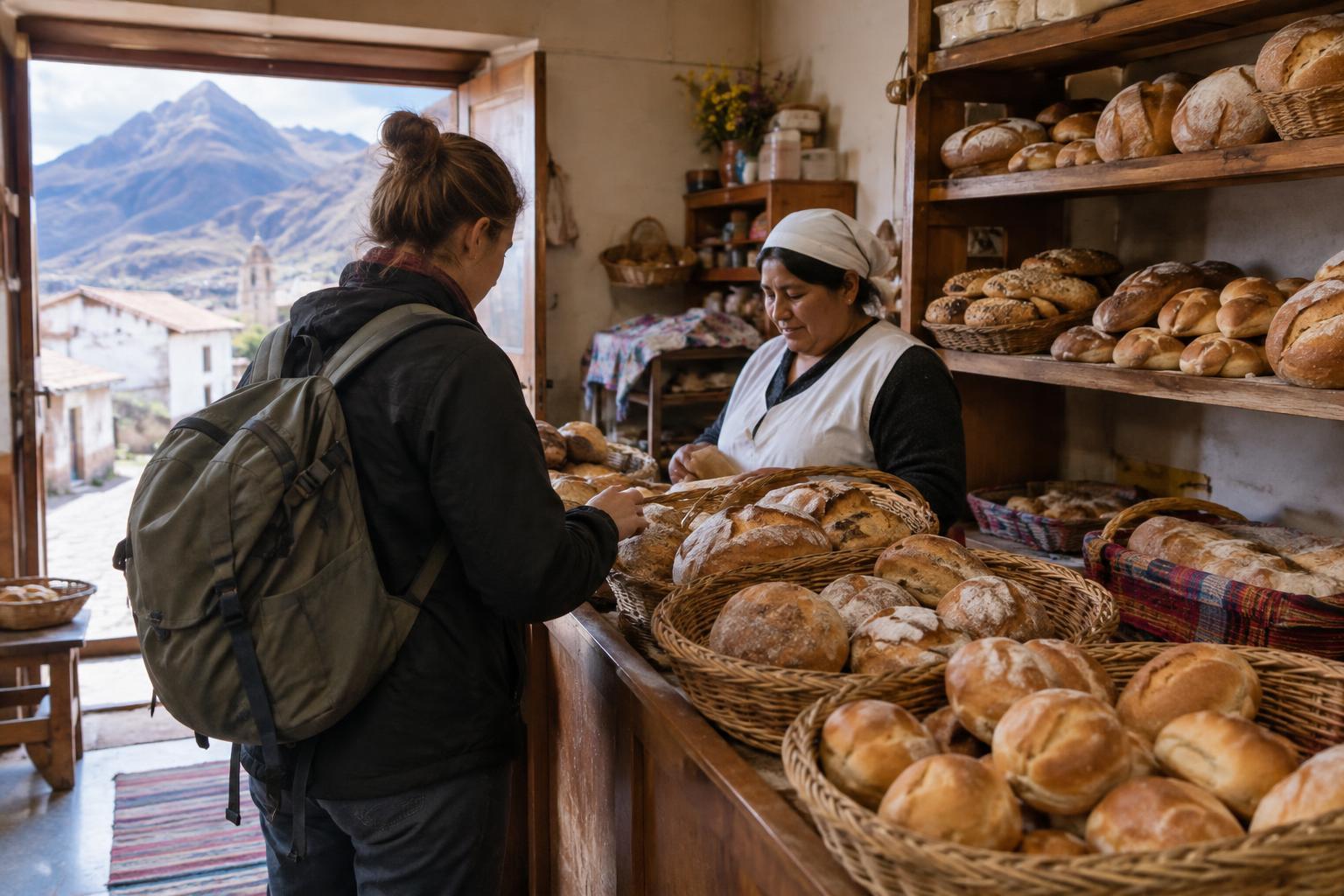
Markets and small restaurants offer opportunities to see how ingredients are used locally. Read the full description of a dish if one is available, and ask a short, specific question when it is not: Is the maize toasted or boiled? Does the soup contain dried potato? Is the quinoa served sweet or savory? If you have dietary requirements, ask about the complete dish, including broth, sauce and accompaniments, rather than assuming that a plant-based staple makes the meal suitable.
Be open to variation without treating a meal as a test of authenticity. Recipes change between households, and cooks may adapt to seasonal supplies or their customers. Pay the stated price, seek permission before photographing people or food preparation, and allow time for a conversation if someone is willing to explain a dish. Curiosity and courtesy will take you further than a checklist of foods to try.